Abraham Lincoln: Vampire Hunter: the review

Feb 15

I had the best history teacher in high school. Her name was Jean Murphy (actually, her name was Mary Jean, but she only ever went by Jean) and she loved teaching European history and music and choir. And the way she taught history was simple: she taught us the version that concentrated on sex. Abelard and Heloise! Henry II! Henry VIII! Christ, most of the Wars of the Roses and the Thirty Years’ War and the Hundred Years’ War and do not even get me started on the House of Habsburgs!

Yes. She taught European history-as-sexfest to a bunch of freshman girls at a private all-girls Catholic high school.

I have no idea how much of it was true, but man oh man, do I remember a lot of it.

There is something to teaching the fun stuff, because you just might interest people enough to find out the other stuff.

§

A couple of days ago I saw this incredibly hot movie trailer:

I remembered seeing the book in the bookstores. (You know, when I still went into them.) It seemed to be the ultimate expression of what Terry Rossio calls “Mental Real Estate” — concepts we all know and are familiar with, turned on their heads just enough to intrigue us. Lincoln! Vampires! Lincoln being fearsome when it comes to vampires!

But I liked the trailer (because I am a nut for over-the-top action movies, always hoping they will have a coherent plot line), so I got the book and read it.

(Yes, I bought this book and immediately read it. I have hundreds of unread books on my Kindle and iPad that have sat there unread for a long time. Hundreds. I’m not saying that pricing your book at free guarantees I’m not going to pay much attention to it; I’m just saying there’s a strong damn correlation along that way of thinking.)

Abraham Lincoln: Vampire Hunter by Seth Grahame-Smith is what I call an “all-in” book — the author took his premise (that Abraham Lincoln was a secret vampire hunter, and that a major force behind American slavery was the needs of vampires) and Grahame-Smith went all-in on it. There is no winking to the audience, there is no “I know this sounds kind of stupid, but just go with it” passages. World War Z by Max Brooks is another “all-in” book — you are either along for that ride, or you give up early on. The conceit is that the author of the book in the present comes across Abraham Lincoln’s secret diaries and decides to write the definitive biography of Lincoln in regards to vampires.

That is how the book reads: a deadly serious biography of Lincoln, with descriptions of the time period and excerpts from the diaries, that describe everything from life on Indiana to floating down the Mississippi to butchering the horrible vampires that are preying on the people. No sparkly bits here, people, no really-cute-vampires-with-a-soul. No, these are monsters and Lincoln is going to put them down.

There are a couple of serious missteps: I read three passages relatively close together (I read fast) that were all dream sequences. (And that was before we get to the famous “the President has been assassinated” dream Lincoln had.)

The difficult thing about this book is the obvious slavery/vampirism metaphor. The obvious way of looking at this is that the entire concept of slavery gets cheapened by making it a vehicle for vampires to thrive. And, I guess that’s true.

However.

I was reminded of Jean Murphy while reading this book. Two reasons why:

1) It’s not Seth Grahame-Smith’s job to teach you history. I’m really sorry if you didn’t know this stuff ahead of time. He wanted to write a fun, crazy novel, and he succeeded, and he managed to get lots of info about the real Abraham Lincoln’s life in there. He does a very good job of making all of the details about the time period feel true (hey, how ’bout that Presidential bodyguard, eh?). So, as a readable history novel: good job, Grahame-Smith.

2) If this book gets one person interested in that time period, whereupon they discover that all this shit is true, it just didn’t involve any fucking vampires, it involved real flesh-and-blood humans doing this to one another then, you know, WINNING.

Because that’s actually where the real sense of dread comes in. Yeah, all of the over-the-top let’s-kill-these-fiends stuff is a lot of fun. The bad Photoshop jobs (sorry, they looked terrible on the iPad) are fun. But the descriptions of slave auctions and slave quarters and that half of the country was willing to fight the other half so that they could own people are all true, and you realize: this shit actually happened. And it doesn’t take a book like Uncle Tom’s Cabin (the very name of which makes readers groan) — you can sucker readers in with Vampires! and bitch-slap them across the face with Not Really! LOL!

If they don’t get to the point where they realize, OMG, this is all real (except for the vampire parts), well… that’s not going to be fixed by one pop novel.

I wonder how many student term papers have talked about the vampire influence on the Confederacy.

§

You want to know the tidbit that’s really stuck with me from this book?

Abraham Lincoln and Stephen A. Douglas dated the same chick.

Okay, it was called “courting” and wasn’t the same thing at all, but…

I’m still that high school freshman, apparently.

Read More

I don’t miss books or bookstores

Jan 31

Many spots around the interweebs have mentioned this insanely stupid interview by Jonathan Franzen, in which he says such brilliant things as

“Maybe nobody will care about printed books 50 years from now, but I do. When I read a book, I’m handling a specific object in a specific time and place. The fact that when I take the book off the shelf it still says the same thing – that’s reassuring.”

and

If printed books do become obsolete in the next 50 years, Franzen is pleased that at least he won’t have to see it. “One of the consolations of dying is that [you think], ‘Well, that won’t have to be my problem’.”

Here’s to hoping that Mr. Franzen was quoted wildly out of context, because there’s nothing to say to that other than, “Oy gevalt.”

Let me help you out with this, Jonathan: the medium is not the message.

A physical book is just a thing.

(Also, Luddism isn’t nearly as cute as Luddites seem to think it is. But I’ll save that for another time.)

When Darin and I moved from Los Angeles back to the Silicon Valley, I think we donated about 30 boxes of books to whatever charity organization we were gifting with our things. When we moved from the house into the rental house at the beginning of the remodel, I think we got rid of another 30 boxes. When we moved from the rental back into the house, we were so determined to get rid of physical objects that even though we’d started to move to mostly e-books, we still had another 20 boxes of books we gave away.

We didn’t give away the ideas.

We didn’t give away the amazing writing (or lack thereof — you know who I’m talking about).

We gave away the things.

We had several bookcases built into our house, mostly by the front door and in my office), and that’s pretty much all the bookcases we need. If I really went for it, I could get rid of at least a third of the books in my office and not even notice.

Here’s the thing, Jonathan: in today’s brave new world, you can still have a book on paper if you really need it. There are tons and tons of print-on-demand places — in fact, your big fancy-schmancy publishers are probably using the same POD outfits that self-published authors are. We just don’t have to, anymore. Now I can have my books any time, anywhere I want.

You know what else I can have, Jonathan?

  • Bigger print anytime, if I want it, without having to pay the exorbitant large-print edition prices.
  • A copy of the book seconds after I hear about it.
  • Books that have been out on the market more than 3 months. Try that in a bookstore, these days.

I don’t want to fill my house with more stuff. I still want to read lots of books. E-books are an awesome way to fulfill both of those needs.

Besides which: bookstores are not really great places right now. For one thing, they’re hard to find: here in Silicon Valley, where we’re all living in the future, there’s a Barnes and Noble at the Pruneyard, and a Barnes and Noble over on Stevens Creek and…uh…yeah, that’s all I got. The biggest independent bookstore in the area I can think of (actually, to be honest, its the only indie bookstore I can think of) is Kepler’s, which closed once in 2005 and, now with the retirement of the owner effective today, I wouldn’t be at all surprised if it went out of business again real soon now. There are NO Barnes and Nobles in the entire city of San Francisco (although they do have more independent bookstores).

I knew Borders was going to go out of business when I realized that their entire floor design was built around their bargain books giveaway, which was always placed right inside the front door, no matter what Borders I went to. Barnes and Noble, which I always liked better because they were far, far more likely to actually have the book I was looking for, has replaced its yards and yards of bookshelves with games and caps and other knickknacks most decidedly un-booklike.

Making it far more likely that they don’t have the book I’m looking for anyhow. Chain bookstores haven’t made discovering new books a better task for the past number of years. An independent bookstore like Kepler’s is great for that (always found something on their tables), but they’re 25 miles away. And I don’t like to be the kind of person who discovers something in a shop and then buys it online — if I discover it in your store, you deserve the sale.

And as I’ve said: I don’t want physical books any more.

So we’ll keep our collections of Terry Pratchett books and Patrick O’Brien books and the Harry Potter series on paper. And a really kickass beautifully laid-out and photographed cookbook collection. But 99% of the time I don’t need actual physical books to enjoy them, Jonathan. I read them for the words. That’s what I remember about the experience. Not how whatever device — Kindle, iPhone, or paper and cardboard — felt in my hand.

Oh, and that book smell people are always yammering on about? Glue and mold, among other things. You’re welcome.

§

Update: There’s an article in the paper about Kepler’s challenges and how they’re planning on facing them.

Read More

Afghanistan for kids

Jan 12

I’m one of the parent volunteers helping out with the 6th grade book club, which is part of Project Cornerstone, a YMCA-driven project in Santa Clara County not only to promote reading but to promote stories about values and questions kids might have. Project Cornerstone is really cool, and in middle school they create book clubs that offer lots of young adult novels with nary a vampire in sight.

This month’s book is The Breadwinner by Deborah Ellis. None of the kids has had a chance to read the book yet, so today we had a discussion of some of the background of the book, which concerns a young girl in Afghanistan who pretends to be a boy in order to support her family. Since we didn’t know anything about the book, we did some fun stuff, like marking off a 10-foot by 10-foot square in the middle of the carpeting to show the size of the place the protagonist lives in, and we discussed the subject matter.

This is what I learned:

  • Some kids hadn’t heard of Afghanistan.
  • None of them knew where it was, although Sophia came closest with “near India.”
  • Some kids had heard the word “Taliban.” They didn’t know what it meant, though.
  • A few knew there had been a war there recently. Even fewer knew that the US had been involved.
  • A couple knew that the predominant religion there was Islam.
  • Almost none of them knew anything about the conditions for women there.
  • Almost all of them tried the hummus I made, and several tried the dried fruits that another mom brought.

We had a discussion about the title. None of the kids knew what the word “breadwinner” meant. We discussed why bread was slang for money, and why bread is so important. (I’m guessing not many of these kids have had to recite “Give us this day our daily bread” too often.)

I have no idea how atypical I was as a child (okay, okay: I was very atypical), but I watched the Evening News with Walter Cronkite every  night with my dad. I didn’t always understand what “Vietnam” or “energy crisis” or “M2″ meant, but I had some exposure to the news. A lot of these kids — from very well-informed, very successful families — are not getting this. I only point this out not to rag on these kids (they’re in 6th grade, after all) but to point out that it’s never too early to start talking to your kids about world events. Or to use big words like “breadwinner” with them. They were really, really interested! They want to know this stuff!

I have high hopes for book discussion next time.

Read More

My Writing To Do List for 2012

Jan 07

I decided to make a list of the writing projects I have on deck for this year.

  • Finish my rewrite of my first ever novel.
  • Write the second novel in that series.
  • Finish the Macbeth novel. Especially before Rob kills me. Because frankly that would suck.
  • Finish the superhero novel.
  • Finish that one project I’m working on under a pseudonym that already has many fans! Which is totally cool.
  • Send out one play to at least five contests.
  • Do this with at least three plays.
  • Write several more 10-minute plays.
  • Write a one-act play.
  • Write a full-length play.
  • Send these out.
  • Work on a list of possible ideas for a screenplay.

You know, for someone who complains she doesn’t have enough ideas, I certainly do have plenty of projects to work on.

And seeing it laid out like that reinforces my desire to have serious writing time!

Read More

City of Thieves: the review

Jan 02

City of Thieves, by David Benioff, takes the old saw, “Daddy (or, in this case, Grandpa), what did you do during the War?” and runs with it. The book opens with the author asking his grandparents, retired Russians living in Florida, what happened during World War II, a time they’ve never been willing to talk about. This time, however, they talk a lot — and Benioff gets an entire novel out of it.

Now, I haven’t Googled to see how “true” this novel actually is. Who the hell cares? It’s a rousing, cinematic ride (by a noted screenwriter) through the horrors and craziness of the Siege of Leningrad in 1941. The narrator, Lev (Benioff’s grandfather), is caught by the Soviet police after looting the body of a German paratrooper (while looking for food, because there’s none to be had anywhere in the city) and released only under one condition: he and another prisoner, a young soldier named Kolya) are charged with doing the impossible. They have to find a dozen eggs. If they don’t, they go to prison — and the conditions in Leningrad have deteriorated so far that the authorities had  stopped even feeding the prisoners, because there’s no food. It is the ultimate damned-if-they-do situation.

It’s a crazy story, with story points and narrative details reminding us that not only does war suck, total war really sucks, and WOW did the Russians have it bad during the war. City of Thieves takes you through Leningrad during wintertime, when you have to fight death, disease, starvation, cannibals, snipers, and the invading German army. You will not be bored reading this book.

Read More

Kindle vs. iBooks redux, or Amazon is making me mad

Dec 28

Kindle vs. iBooks redux, or Amazon is making me mad

I’ve been a customer of Amazon since 1995 or 1996. (I can’t get into my Quicken database right now–thank you, Intuit, for your complete abandonment of the Macintosh platform, just as it’s, y’know, exploding–but I can find out if I really need to. Do I really need to?) I had all of the initial “Thank you for being our customer!” travel mugs–remember those? I have an Amazon credit card that gives me points back on purchases. I used to tell my sister that if I could, I would buy my groceries from them. (This was before you could, in fact, buy many of your groceries from them.)

I’ve run into a few things lately that make me say, Are you kidding? Are you trying to get rid of me as a customer?

I’ve been wondering if it might be worth switching over to an airline points card, to be honest.

I have a physical Kindle–the Kindle 3, in case that makes a difference. And I have an iPad. I have read books on both. I still think the reading experience is pretty much a wash, frankly. (And now that iBooks has a night-time reading mode of white text on a black background, I’d say reading on the iPad is slightly better than the Kindle.) However, with an extra year-plus of use of both devices under my belt, I have many, many more things to say about the pros and cons of the Kindle device, the Kindle app/ecosystem, and iBooks.

Problem #1: Figure Out Collections, People

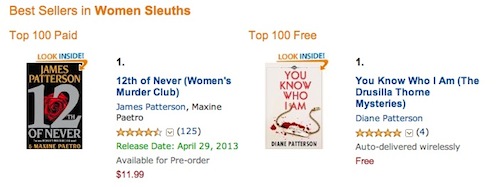
I’m guessing the problem here is that the engineers who are designing these things don’t actually read books or something. I don’t know. I have a Kindle collection of (drum roll, please) 711 items. I am always checking the Kindle bestsellers page to see what’s hot…particularly on the Free Bestseller lists. You can learn a lot about how to go about marketing a self-published book from this page, writers. Anyhow, visits to the have inspired me to download a crapload of books.

Yes, my Unread folder is insane. It’s like a To Be Read pile, only it’s not taking up physical space in my house any more.

I have attempted to take control of my books by dividing them into what Amazon calls Collections. I file each book as I get it into two folders: the Unread folder (because, duh, haven’t read it yet) and a genre folder that I created (Romance, SF, Mystery, whatever). Strangely, despite having downloaded 100% of my books from Amazon, none of the books have genre tags attached to them, so I have to investigate what the book and figure out where it goes. After I read a book, I delete it from the Unread folder.

Kindle screenshot

I’ve done this with seven hundred and eleven books. (Maybe less about 15, because I haven’t sorted those yet.) Once, back around when I had a mere 300 books, my Kindle sneezed and lost all of my Collections. I didn’t lose the books, just the way they were organized. There was some way that I could get all of my Collections back without much effort on my part, but how to do that was not at all obvious (and using an application like Calibre is an exercise in the lovable world of Open Source No Thank You), so I ended up refiling every single one again. If I lose my Collections again, I will not refile them, certainly not with 711 books, and Amazon provides no easy way of keeping these books sorted.

Even worse, however, is that the Collections do not propagate to other devices. Collections are specific to my Kindle device, not my Kindle account the road and would like to pick up with the book I’ve been reading, I have to remember the name of the book. Or the author’s name. Or something. If I’ve been reading a Regency romance novel, often all I can remember is “guy with a title blah blah feisty debutante blah Almack’s.”

Unless the book I’ve been reading has made a gigantic impression on me, I don’t remember enough about it to download it to the Kindle app on my iPhone. (Which is actually a really fabulous lesson on “How to make your novel stand out” and “What is memorable about a book.” But that’s another entry.)

On iBooks, however, having all of your books available to you is an extremely simple process:

  1. Click on the “Books” button.
  2. Add new collection name. IBooks Collections
  3. On main page, click on the “Edit” button.
  4. Select as many books as you want. (This is so damned better than Amazon’s extremely clumsy one-book-at-a-time-I’m-going-to-kill-myself-with-boredom method.) Selecting multiple iBooks
  5. Click on the “Move” button.
  6. Choose new collection to move them to.

The problem with Collections becomes really obvious on Kindle if you have more than ten books. For one thing, it takes forever to sort them into their folders. (Like I said, if I ever lose the Collections on those 711 books again…yeah, that’s it, I’m done.) The only useful thing is that the last book opened is the book at the top of the list, so it’s pretty easy to find what you’ve been reading.

On iBooks you can sort by cover art or in a list (where you can sort by Titles, Authors, or Categories, which are the genre assigned to the book, either by the iBooks store or by you, the user, in the Info field).

A list of iBooks

If you sort by cover art, of course, the last book opened is the first one on the bookshelves, so you always know what the last book you had open was.

IBooks Shelves

Advantage: iBooks. No question. Hands down.

Problem #2: Loaning Books

This is the one frustrating the hell out of me this week.

The first books I bought for my Kindle device were the Hunger Games trilogy. Sophia is old enough to read them and wanted to, which I was fine with. Not so fine: her seeing the other books in my Kindle collection. Instead, I loaned her the book so she could read it on her iOS device.

Today she asked me to reloan her Mockingjay.

According to my Kindle, it was still on loan.

Kindle On Loan

According to the “Manage Your Kindle” page on Amazon, I didn’t own it at all. (Of course, I’ve never found any of the Hunger Games books through this page, so no big deal.)

Manage Your Kindle

On an Amazon page for a book I’ve already bought, I usually get this message:

Loan This Book

Mockingjay did not give me that line about “Loan This Book.”

I couldn’t access Mockingjay on my Kindle, and I couldn’t loan it to my daughter. Effectively, I no longer owned the book.

I had to send a message to Amazon–and WOW is their Help page of no help whatsoever! I got a maze of twisty little popup menus, none of which applied to my situation–and their service rep reset the Loaned bit assigned to Mockingjay by hand. Their email responding to my inquiry was of no help whatsoever (“1. Please check and make sure the device is fully charged.”) and I gave their “Rate This Response” a low rating.

If the only way to access my own damn book is through your Customer Service rep? This rates: NOT GOOD.

Contrast this with loaning a book via iBooks. Now, admittedly, iBooks does not allow you to loan a book to any old friend in the universe, and that is a major fail on their part. However, if you and your loved ones have Home Sharing enabled, you copy the book from their account into your account and sync with your device.

You are now done with the process. And everybody can read the book at the same time. The book’s not held hostage to one pair of eyes.

Advantage: iBooks. Is there a question about this?

Problem #3: Finding New Books

There’s no question about this: Amazon’s store is so much better than just about any other shopping experience out there. And the “Customers Who Bought This Item Also Bought” feature is useful.

Browsing the iBooks store in iTunes is just…annoying.

Advantage: Kindle. This design fail is so spectacular on Apple’s part that I wonder what in the hell is going on over there and, no, I don’t have someone I can ask.

Neither online bookstore is as good as wandering around a good bookstore though, but I expect in the next year or two the real-world experience will disappear altogether. Despite not buying very many books on paper these days, I am actually upset about this.

Problem #4: Keeping Your Place In A Book

If I do manage to load a book onto my Kindle device and into my Kindle app on my iPad, the Kindle’s Whispersync method of making sure that you’re always on the same page works great.

Until I finish the damn book. Because if I decide to read it again, the Kindle system always thinks I’m on the last page if I open it on the other device. Thereby losing my place.

It’s extremely irritating.

My friend Nina and her husband share one Kindle account (so they don’t have to go through the annoyances of loaning a book, see above). Theoretically, they should be able to read the same book at the same time, but if someone finished it first, they both finish it. At this point, they have to use bookmarks to individually mark their places, and woe to them who forgets to adjust the placement of their bookmark.

Advantage: iBooks. If I start a book over, it puts me on that page no matter what device I’m using. And sharing books is much, much easier.

Problem #5: Turning the page

The biggest problem I’ve had reading on my iPad in bed is that my right hand gets tired having to be the one tapping the screen to turn the page forward. I can’t switch off between hands. The Kindle device has buttons on both sides that allow you to advance or go back.

Advantage: The Kindle, but only the Kindles with physical buttons. I’m pretty sure I’d have the same problem with the Kindle Touch. The Kindle wins for being lighter (except if, as in my case, it has a heavy leather case on it) and for having go-forward/go-back buttons on both sides.

Problem #6: Losing Your Device

Losing my Kindle would be a total bummer. However, it’s $100, which as electronic gadgets go is not a terrible loss, and if I wanted to replace it with one of these new Kindles and didn’t mind getting ads thrown at me, I could replace it for $80.

Losing my iPad would be a severe bummer, to the point where the iPad stays at home except when taken with in a special bag and watched carefully.

Advantage: Kindle. Because it’s a cheap piece of replaceable plastic crap.

I keep hearing that iBooks has got to step up its game, and I don’t see it that way at all. Slowly but surely, I’m moving my book collection to iBooks. I wish their selection were better, but it is improving all the time.


Read More